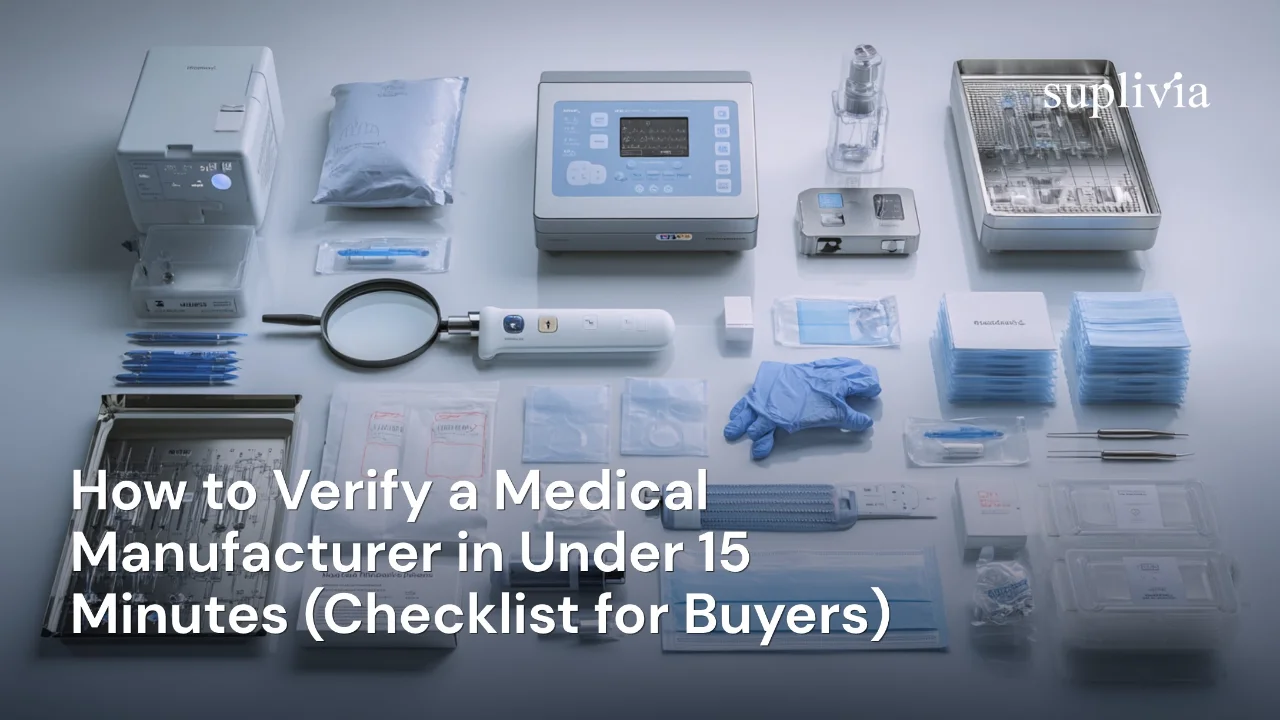
Medical manufacturer verification is one of the most critical steps in medical sourcing, especially when procurement teams must make fast purchasing decisions under pressure. A structured verification process can significantly reduce compliance risks, counterfeit exposure, and unreliable supply chains.
Start with regulatory and certification validity checks
The first step is confirming whether the manufacturer holds valid and traceable certifications. In medical procurement, the minimum baseline typically includes ISO 13485 for quality management systems and relevant product approvals such as CE marking for the EU or FDA registration for the US market.
Do not rely on certificate logos or PDFs provided by the supplier alone. Instead, verify certificates through issuing bodies or official databases where possible. Pay attention to expiry dates, certificate scope, and whether the legal manufacturer name matches the entity you are evaluating.
Many procurement errors occur when distributors or trading companies present themselves as manufacturers. Confirm the “legal manufacturer” definition on documentation, not just branding or marketing materials.
Cross-check company legitimacy and operational footprint
After certification validation, assess whether the company is operationally real and consistent. A legitimate manufacturer should have a verifiable production footprint, consistent business registration records, and traceable export activity.
- Check business registration details and legal entity name consistency
- Look for factory address alignment across documents, website, and invoices
- Verify presence on trade databases or export/import records where accessible
- Assess whether product range matches claimed manufacturing capabilities
Red flags include vague addresses, inconsistent company names, or overly broad product catalogs that suggest trading activity rather than manufacturing capability.
KEY TAKEAWAY
If certification, legal entity details, and production footprint do not align, the supplier should not be considered verified regardless of branding or pricing.
Evaluate quality system signals beyond certificates
Certificates alone do not guarantee consistent production quality. Procurement teams should assess operational quality signals such as batch traceability, complaint handling processes, and documented quality control workflows.
A reliable manufacturer will typically demonstrate structured QA documentation, clear product traceability systems, and transparent recall procedures. The absence of these systems often indicates weak compliance infrastructure even if certifications exist.
Communication speed and technical responsiveness also matter. Manufacturers with strong quality systems usually respond with precise technical documentation rather than generic sales responses.
Run a fast risk check before approval
Before final approval, conduct a rapid risk assessment focusing on three areas: financial stability indicators, export history consistency, and dependency risk (single-site production vs distributed manufacturing).
This step is especially important for hospital procurement teams and distributors managing recurring supply contracts. Even compliant manufacturers can present operational risk if they lack production redundancy or export experience.
In medical sourcing, the fastest verification failures usually come from skipped cross-checks, not missing certificates.
A structured 15-minute verification process cannot replace full due diligence, but it can eliminate the majority of high-risk suppliers before deeper evaluation. For procurement teams managing large supplier networks, standardized verification workflows reduce both cost and procurement cycle time.
Platforms like Suplivia streamline this process by pre-verifying manufacturers and standardizing certification and identity checks across global suppliers, reducing the need for manual validation at every sourcing step.